Quick Summary:
A fertilizer granulator machine is an industrial device that turns fine powder into uniform, durable granules. It improves spreading, storage, and nutrient delivery while reducing waste. The main types include rotary drum, disc pan, double roller press, and new type organic granulators.
Choosing the right machine depends on raw material moisture, production capacity, budget, and your full production line needs—moisture content is the biggest factor.
When you spent months composting manure or blending raw fertilizer powder, then a stiff wind blows half of it across the field. Annoying, right? Powder fertilizer clumps, creates dust, spreads unevenly, and wastes nutrients. That’s a costly problem.
But here’s the solution: a fertilizer granulator machine is an industrial workhorse that turns fine, dusty powder into solid, uniform pellets. Granules spread evenly, store without caking, and deliver nutrients consistently.
In this guide, as a professional fertilizer granulator machine manufacturer, we will cover how granulators work, the main types (rotary drum, disc pan, double roller press, and new type organic granulators), benefits, and how to choose the right one for your operation in 2026.

Why Bother Granulating Fertilizer Anyway?
Good question.
When fertilizer stays in powder form, it causes all kinds of headaches. It clumps when moisture gets in. It creates dust when you load it. And it’s almost impossible to spread evenly with farm equipment.
Granules fix all of that.
Here’s the deal:
- Easy spreading. Granules flow smoothly through spreaders, drills, and applicators. No clogging. No guesswork.
- Better storage. Pellets resist moisture and last longer than loose powder.
- Even nutrients. Every granule contains a balanced mix of nutrients. That means every square foot of soil gets the same feeding.
- Less waste. Powder blows away. Granules stay where you put them.
Bottom line? Granulated fertilizer is simply easier to use and more effective.
How a Fertilizer Granulator Machine Works
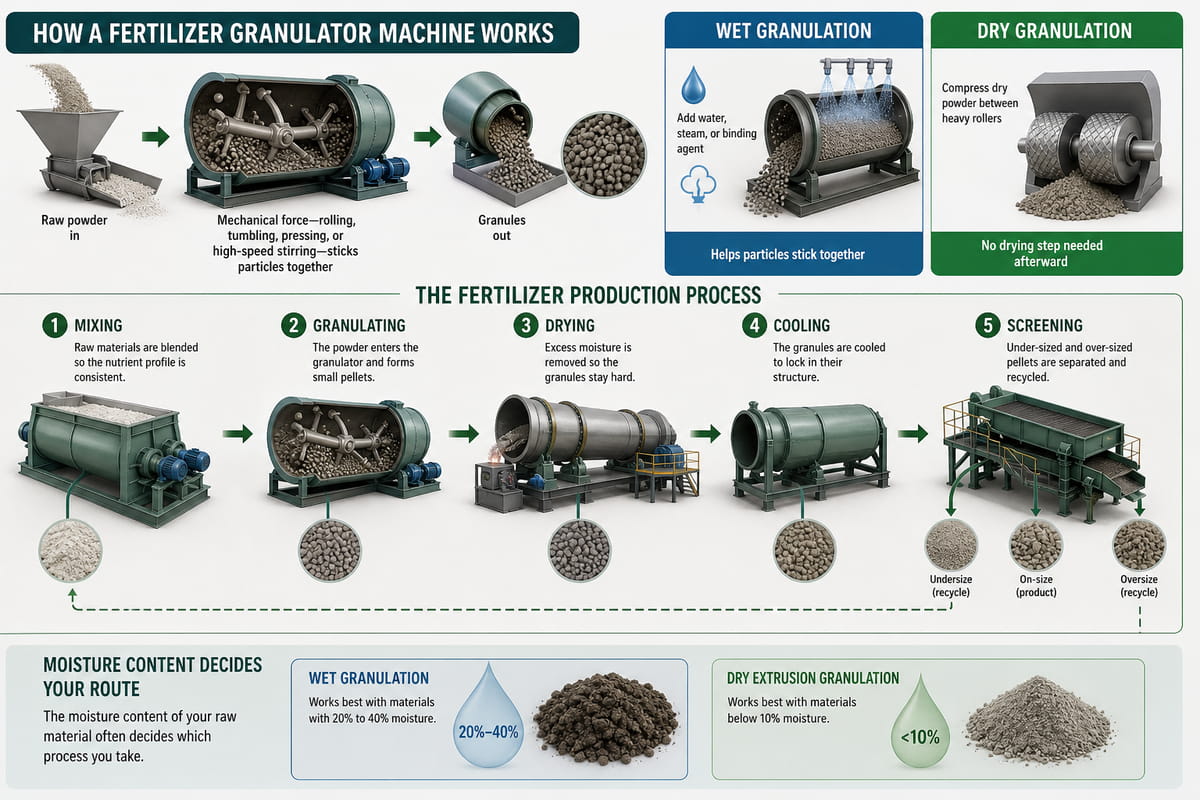
The actual process depends on the type of machine. But most fertilizer granulation equipment follows the same basic idea.
You feed raw powder in one end. The machine applies mechanical force—rolling, tumbling, pressing, or high-speed stirring. That force sticks the particles together. Out comes granules.
In most fertilizer production lines, you’ll see this sequence:
- Mixing. Raw materials are blended so the nutrient profile is consistent.
- Granulating. The powder enters the granulator and forms small pellets.
- Drying. Excess moisture is removed so the granules stay hard.
- Cooling. The granules are cooled to lock in their structure.
- Screening. Under-sized and over-sized pellets are separated and recycled.
Some machines use a wet granulation process. That means you add water, steam, or a binding agent to help particles stick together.
Others use dry granulation. You simply compress dry powder between heavy rollers. No drying step needed afterward.
The moisture content of your raw material often decides which route you take. Wet granulation usually handles materials with 20% to 40% moisture. Dry extrusion granulators work best with materials below 10% moisture.
4 Main Types of Fertilizer Granulator Machines
Not all granulators are created equal.
Let me walk you through the four most common types. That way, you can match the machine to your material and production goals.
1. Rotary Drum Granulators

These are the big boys.
A rotary drum granulator uses a large spinning cylinder. As the drum rotates, internal flights lift and tumble the material. The powder rolls over itself and forms granules.
I personally recommend rotary drum granulators when you need high-volume NPK fertilizer production. They’re built for continuous operation. And they can handle large capacities—often 5 to 30 tons per hour.
The tradeoff? They’re expensive. And because they use a wet process, you’ll need drying and cooling equipment on the back end.
2. Disc Pan Granulators
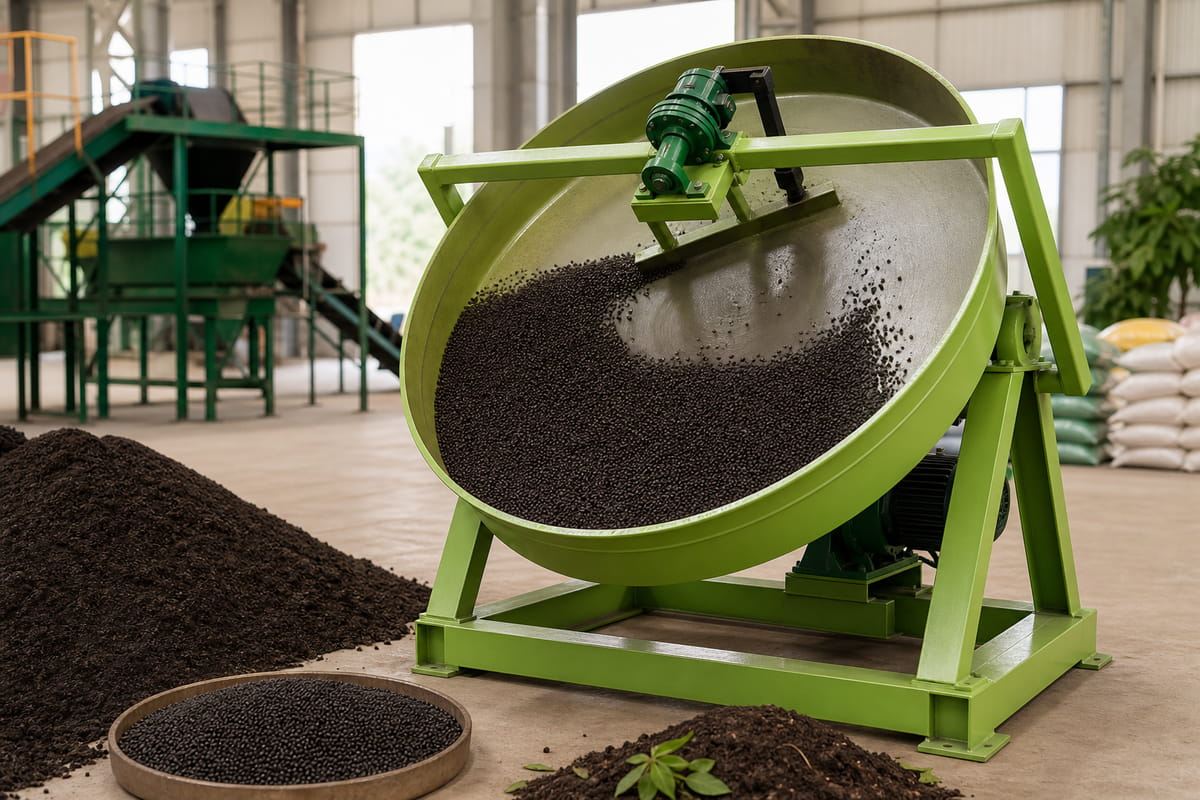
If you’re looking for something simpler, check out a disc pan granulator.
This machine looks like a shallow, tilted pan. The pan spins, and raw materials get rolled into round pellets. You can adjust the angle and speed to control granule size.
Disc pan granulators are great for small to medium organic fertilizer plants. They’re affordable, easy to operate, and produce beautiful, uniform granules.
One thing I love about pan granulators? You can watch the entire process happen in real time. That makes it much easier to adjust on the fly.
3. Double Roller Press Granulators
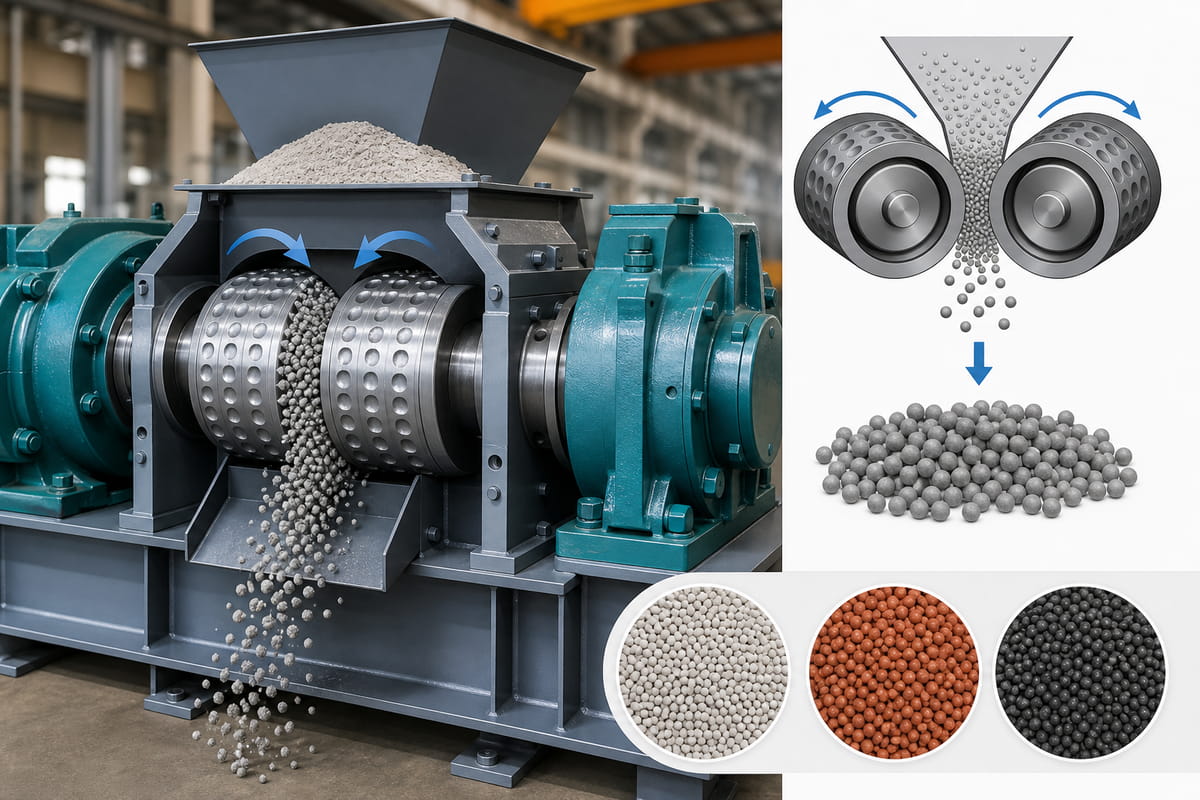
Here’s where things get interesting.
A double roller press machine squeezes dry powder between two counter-rotating rollers. The rollers have pockets or molds. When the powder passes through, it gets compressed into hard, dense granules.
No water. No binders. No drying step.
This machine is perfect for compound fertilizer powder and dry NPK granules. It saves energy, reduces operating costs, and still produces high-density pellets.
If you want a straight answer: for dry granulation, double roller press is usually your best bet.
4. New Type Organic Fertilizer Granulators
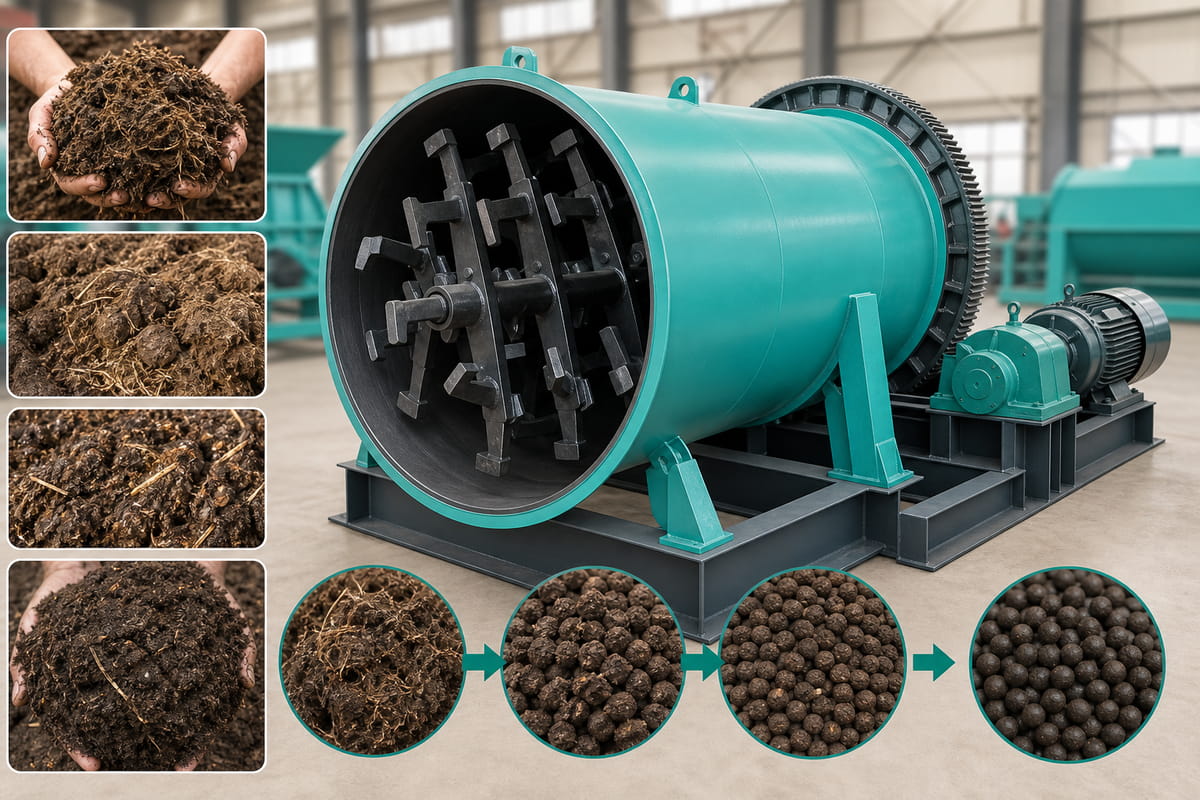
These are my secret weapon for organic waste.
A new type organic fertilizer granulator—also called a stirring teeth granulator—uses high-speed rotating teeth inside a drum. The teeth mix, stir, and force the material into round granules.
This design is especially good for chicken manure, cow dung, compost, and other high-organic materials. It handles stringy, fibrous stuff that other machines can’t process well.
Plus, the granulation rate is impressive. I’ve seen these machines hit a balling rate above 90%.
Quick Comparison Table
Here’s a simple breakdown to help you compare:
| Granulator Type | Best For | Capacity Range | Energy Cost |
|---|---|---|---|
| Rotary Drum | Large-scale NPK production | 5–30 TPH | Medium |
| Disc Pan | Small/medium organic plants | 0.5–6 TPH | Low |
| Double Roller Press | Dry compound fertilizer | 1–10 TPH | Very Low |
| New Type Organic | Animal manure and compost | 1–8 TPH | Medium |
In my experience, there’s no single “best” machine. There’s only the best machine for your specific situation.
What Raw Materials Can You Process?
This is one of the most common questions I get.
The short answer: a lot.
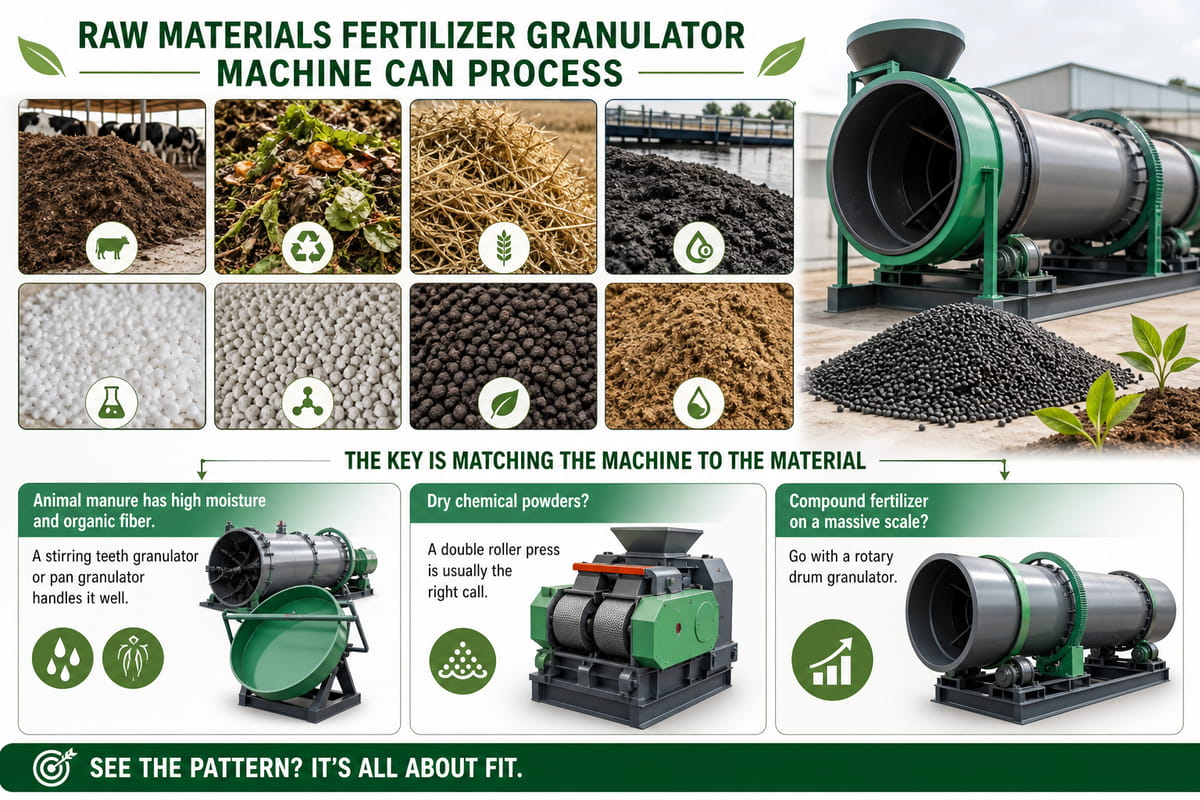
Fertilizer granulators can process:
- Livestock and poultry manure
- Compost and green waste
- Crop straw and agricultural residues
- Sludge and municipal waste
- Urea, DAP, and potassium chloride
- NPK compound fertilizer powders
- Bio-organic fertilizer blends
- Distillers’ grains and oil cake
The key is matching the machine to the material.
For example, animal manure has high moisture and organic fiber. A stirring teeth granulator or pan granulator handles it well.
Dry chemical powders? A double roller press is usually the right call.
Compound fertilizer on a massive scale? Go with a rotary drum granulator.
See the pattern? It’s all about fit.
How to Choose the Right Fertilizer Granulator Machine in 2026
If you’re shopping for a fertilizer granulator machine this year, don’t just pick the cheapest one.
Here’s a simple 5-step checklist I share with everyone who asks.
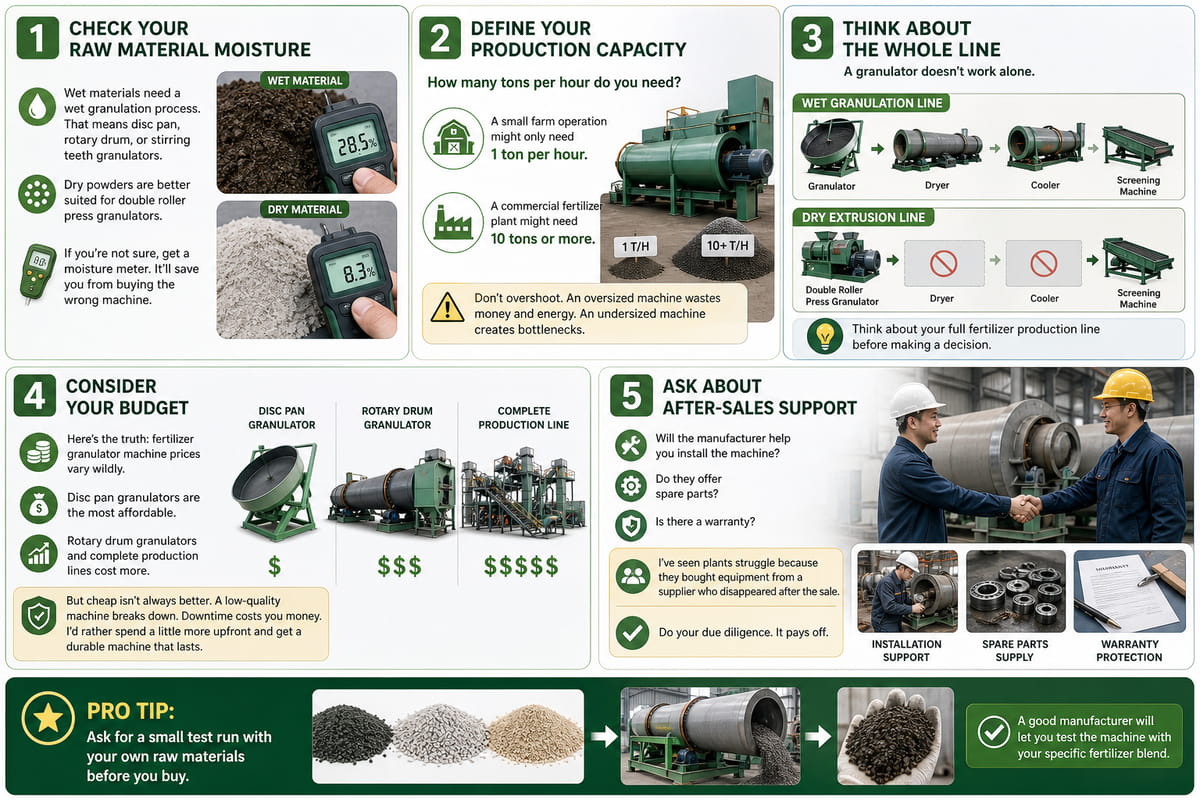
Step 1: Check Your Raw Material Moisture
This is the biggest factor.
Wet materials need a wet granulation process. That means disc pan, rotary drum, or stirring teeth granulators.
Dry powders are better suited for double roller press granulators.
If you’re not sure, get a moisture meter. It’ll save you from buying the wrong machine.
Step 2: Define Your Production Capacity
How many tons per hour do you need?
A small farm operation might only need 1 ton per hour. A commercial fertilizer plant might need 10 tons or more.
Don’t overshoot. An oversized machine wastes money and energy. An undersized machine creates bottlenecks.
Step 3: Think About the Whole Line
A granulator doesn’t work alone.
If you use wet granulation, you’ll need a dryer, cooler, and screening machine. If you use dry extrusion, you can skip drying and cooling entirely.
Think about your full fertilizer production line before making a decision.
Step 4: Consider Your Budget
Here’s the truth: fertilizer granulator machine prices vary wildly.
Disc pan granulators are the most affordable. Rotary drum granulators and complete production lines cost more.
But cheap isn’t always better. A low-quality machine breaks down. Downtime costs you money.
I’d rather spend a little more upfront and get a durable machine that lasts.
Step 5: Ask About After-Sales Support
This one’s overlooked too often.
Will the manufacturer help you install the machine? Do they offer spare parts? Is there a warranty?
I’ve seen plants struggle because they bought equipment from a supplier who disappeared after the sale.
Do your due diligence. It pays off.
Pro Tip: Ask for a small test run with your own raw materials before you buy. A good manufacturer will let you test the machine with your specific fertilizer blend.
Real-World Example: Turning Manure into Profit
Let me share a quick story.
A few years ago, I worked with a poultry farmer who had a serious waste problem. He had tons of chicken manure piling up. It smelled. It attracted pests. And it cost him money to dispose of it.
We set him up with a new type organic fertilizer granulator.
The process was simple:
- Compost the chicken manure
- Dry it slightly
- Feed it into the granulator
- Screen and package the finished pellets
The result? He turned a waste problem into a new revenue stream. His organic fertilizer granules sold to local farms and garden centers.
That’s the power of a granulator.
It’s not just about making fertilizer easier to spread. It’s about turning low-value waste into high-value product.
Common Mistakes to Avoid
I’ve seen a lot of people make these mistakes. Don’t be one of them.
Ignoring Moisture Content
This is the #1 mistake.
If your material is too wet, granules turn to mush. If it’s too dry, they won’t form properly. Measure and control moisture from the start.
Buying Before Understanding Your Process
Some people buy a granulator before they’ve figured out crushing, mixing, drying, and screening.
That’s backwards.
Map out your entire process first. Then choose the granulator that fits.
Skipping the Screening Stage
Even the best granulator produces some off-size material.
You need a screening machine to separate good granules from fines. Then recycle the rejects back into the granulator.
Forgetting About Dust Control
Granulators reduce dust, but they don’t eliminate it.
Make sure your facility has proper ventilation and dust collection. It’s better for your workers and your equipment.
Is a Fertilizer Granulator Machine Worth It?
Let’s do the math.
Powder fertilizer is messy. It wastes nutrients. It stores poorly. And it’s hard to apply accurately.
Granular fertilizer solves all those problems. And in 2026, farmers expect high-quality granules that flow, store, and perform.
If you’re producing fertilizer commercially, a granulator isn’t a luxury. It’s a necessity.
Even on a smaller scale, it can pay for itself by reducing waste and increasing product value.
Bottom Line
The fertilizer industry is moving toward granules. That’s not a trend. It’s a standard.
What is a fertilizer granulator machine? It’s a proven, profit-boosting workhorse. And once you start producing quality granules, you’ll wonder how you ever managed without one.