Quick Summary
Organic fertilizer production uses five main raw material categories: animal manure (chicken, cow, pig), agricultural residues (straw, corn stalks), industrial by-products (brewery waste, sugar mill mud), urban organic waste (kitchen scraps, green waste), and mineral additives (rock phosphate, lime).
The key to success is achieving a 25-30:1 carbon-to-nitrogen ratio through proper material mixing. Common mistakes include using contaminated materials, ignoring moisture content (ideal: 50-60%), and skipping the curing phase, which can result in plant damage.
Ever think about what’s actually in that bag of organic fertilizer that makes tomatoes go wild?
What raw materials are used in organic fertilizer production isn’t just tossing manure in a heap and walking away. Not even close. There’s real science behind it, turning leftover waste into nutrient‑packed fuel your soil can actually use.
In this guide, as a professional organic fertilizer production line manufacturer, I’ll lay out exactly which raw materials work best. And why they matter.
Let’s get into it.
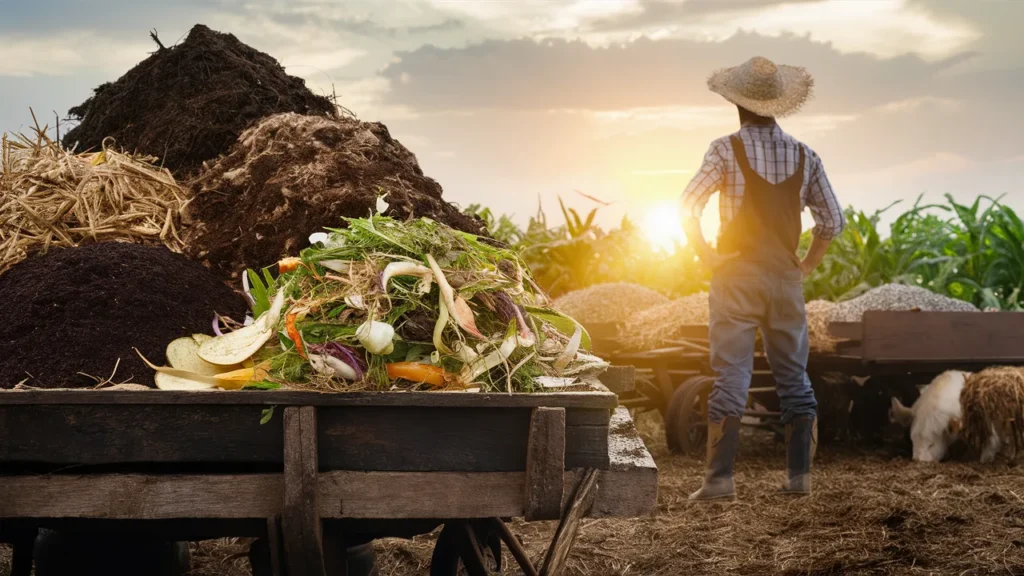
The Big 5 Categories of Organic Fertilizer Raw Materials
Think of organic fertilizer raw materials like ingredients in a recipe.
You need the right mix to get the best results.
Here are the main categories:
1. Animal Manure: The Heavy Hitter
Animal manure is the MVP of organic fertilizer production.
Why?
Because it’s packed with nitrogen, phosphorus, and potassium – the holy trinity of plant nutrients.
But not all manure is created equal:
Chicken Manure
- Nitrogen content: 3-4%
- Fast-acting
- Best for: Leafy greens and nitrogen-hungry crops
- Downside: Can burn plants if not composted properly
Cow Manure
- Nitrogen content: 0.5-1%
- Slow-release
- Best for: Long-term soil improvement
- Perfect for beginners (hard to mess up)
Pig Manure
- Balanced nutrient profile
- Easy to compost
- Watch out for: Higher salt content
Sheep and Horse Manure
- Already partially composted (thanks to their digestive systems)
- Ready to use faster
- Loose texture = better aeration
Pro Tip: Mix high-nitrogen manure (like chicken) with high-carbon materials (like straw) for optimal composting. The ideal carbon-to-nitrogen ratio? 25-30:1.
2. Agricultural Residues: The Carbon Champions
Here’s something most people don’t realize:
Those crop leftovers in your field? They’re fertilizer goldmines.
Rice Straw and Wheat Straw
- C/N ratio: 60-80:1
- Improves soil structure
- Retains moisture like a sponge
Corn Stalks
- Breaks down faster than straw
- Rich in potassium
- Perfect for mixing with high-nitrogen materials
Peanut Shells and Cottonseed Hulls
- Adds bulk and aeration
- Slow decomposition = long-lasting soil improvement
- Great for heavy clay soils
I’ve seen farmers transform 10 tons of rice straw waste into 4 tons of premium organic fertilizer. That’s turning a disposal problem into a profit center.
3. Industrial By-Products: The Hidden Gems
Industrial waste might not sound appetizing, but plants LOVE this stuff.
Sugar Mill Filter Mud
- Calcium-rich
- Neutralizes soil acidity
- C/N ratio: 20-30:1 (nearly perfect)
Brewery Waste and Bean Dregs
- High protein = high nitrogen
- Decomposes quickly
- Moisture content needs management
Vinasse (from alcohol production)
- Potassium powerhouse
- Dark color = high organic matter
- Mix with drier materials
In 2026, smart fertilizer producers are partnering with local industries to get these materials for FREE. One producer I know saves $50,000/year just by collecting brewery waste.
4. Urban Organic Waste: The Circular Economy Solution
Cities produce mountains of organic waste.
And it’s perfect for fertilizer production.
Kitchen Waste
- Nitrogen-rich
- High moisture (needs balancing)
- Requires proper sorting
Green Waste (Grass Clippings, Leaves)
- Seasonal availability
- Great carbon source
- Easy to process
Municipal Sludge
- Controversial but effective
- Must meet heavy metal standards
- Requires special processing
The key with urban waste? Quality control.
You need systems to remove plastics, metals, and other contaminants. But get it right, and you’re looking at virtually unlimited raw materials.
5. Mineral Additives: The Performance Boosters
Sometimes organic materials need a little help.
That’s where mineral additives come in:
Rock Phosphate
- Slow-release phosphorus
- Lasts for years in soil
- Best for acidic soils
Potassium Feldspar
- Natural potassium source
- Improves fertilizer texture
- Weather-resistant
Lime Powder
- pH adjuster
- Reduces odor during composting
- Speeds up decomposition
Bio-inoculants
- Beneficial microbes
- Accelerates composting
- Improves nutrient availability
The Science Behind Material Selection
Here’s what separates amateur hour from pro-level fertilizer production:
Understanding the carbon-to-nitrogen (C/N) ratio.
Too much carbon (like pure straw)? Decomposition crawls.
Too much nitrogen (like pure chicken manure)? You get a stinky, slimy mess.
The sweet spot: 25-30:1 C/N ratio.
Here’s a quick reference:
| Material | C/N Ratio | Mixing Strategy |
|---|---|---|
| Chicken Manure | 8-12:1 | Add straw or sawdust |
| Cow Manure | 20-25:1 | Nearly perfect as-is |
| Rice Straw | 60-80:1 | Add manure or food waste |
| Kitchen Waste | 15-20:1 | Add dry leaves or paper |
Regional Raw Material Strategies
Location matters when choosing raw materials.
Southeast Asia (Indonesia, Malaysia)
- Palm oil residues dominate
- 70% of palm biomass goes to waste
- Rich in nutrients and organic matter
Latin America
- Food market waste is huge
- 9% of municipal solid waste in some cities
- High moisture requires careful management
Africa
- Diverse agricultural residues
- Limited infrastructure = local sourcing essential
- Poultry manure widely available
North America/Australia
- Animal waste from large-scale operations
- 10+ million tons of feedlot manure annually
- Strict regulations but high quality
From Raw Materials to Finished Organic Fertilizer Product
Turning raw materials into quality fertilizer isn’t magic.
It’s a process:
Step 1: Material Collection and Preparation
- Separate contaminants
- Adjust moisture (40-60% ideal)
- Size reduction if needed
Step 2: Mixing
- Balance C/N ratio
- Add amendments
- Ensure uniform distribution
Step 3: Composting/Fermentation
- Traditional: 30-45 days
- With bio-inoculants: 15-20 days
- Temperature control is critical
Step 4: Processing
- Grinding for powder
- Granulation for pellets
- Screening for consistency
Step 5: Quality Enhancement
- Add beneficial microbes
- Adjust nutrient levels
- Coating for slow-release
Common Mistakes to Avoid
I’ve seen these errors tank entire production runs:
Using contaminated raw materials
- Always test for heavy metals
- Remove non-organics completely
- Know your source
Ignoring moisture content
- Too wet = anaerobic conditions
- Too dry = slow decomposition
- Target: 50-60% moisture
Poor C/N ratio management
- Test your materials
- Calculate ratios before mixing
- Adjust as needed
Skipping the curing phase
- Fresh compost can burn plants
- Allow 2-4 weeks for stabilization
- Test pH before use
The Bottom Line on Raw Materials
Here’s what it all comes down to:
The best organic fertilizer producers don’t just use whatever’s cheapest or most available.
They understand their raw materials at a molecular level. They know how different materials interact. And they adjust their formulas based on:
- Local soil needs
- Crop requirements
- Seasonal availability
- Processing capabilities
In fact, one study found that properly selected and processed raw materials can increase crop yields by 30-40% compared to poorly made organic fertilizers.
Making Raw Material Selection Work for You
Want to nail your raw material selection?
Follow this framework:
- Assess local availability – What’s abundant and cheap near you?
- Test everything – C/N ratio, moisture, contaminants
- Start small – Test batches before scaling up
- Build relationships – Partner with waste producers
- Keep records – Track what works and what doesn’t
Remember: The best raw material is the one you can get consistently, process efficiently, and that produces results for your customers.
Future Trends in Raw Material Usage
Looking ahead to late 2026 and beyond:
- Insect frass is becoming mainstream (high chitin content)
- Algae biomass from wastewater treatment
- Precision fermentation residues from alt-protein production
- Biochar integration for carbon sequestration benefits
The organic fertilizer industry is evolving fast. But one thing remains constant: understanding your raw materials is the foundation of success.
Now you know exactly what raw materials are used in organic fertilizer production – from the basics to advanced strategies.
The question is: Which materials will you start with?