Key Takeaways
- Starting a small scale organic fertilizer production business requires $17,000-32,000 in startup costs and can generate $4,500-15,000 monthly revenue with 40-60% profit margins.
- The process involves choosing between windrow composting, in-vessel composting, or vermicomposting methods, securing free raw materials from farms and food processors, and investing in basic equipment like compost turners and packaging machines.
- Success depends on locking in consistent material suppliers, navigating permits and regulations, and targeting small organic farms and garden centers while avoiding common mistakes like starting too big or ignoring quality control.
Want to turn trash into cash and do something good for the planet at the same time?
Starting a small organic fertilizer setup could be your break. The organic farming market is on fire right now, growing around 12% a year, and honestly, timing couldn’t be better.
Most folks have no clue how to begin. Equipment options feel confusing, rules look scary, and the whole production process just seems like a mess.
Sound familiar?
Don’t worry. I’ve got you covered.
In this guide, as a professional organic fertilizer production line manufacturer, I’ll show you exactly how to start a small scale organic fertilizer production business step-by-step. No fluff. Just actionable advice you can use right now.
Let’s dive in.
Why Organic Fertilizer?
Here’s a number that’ll stop you for a second:
Global organic fertilizer sales are on track to reach about $15.9 billion by 2026.
So why’s that happening?
Pretty simple. Farmers are walking away from chemical stuff fast. Costs are high, soil takes a hit, and buyers keep asking for organic food. Right.
Plus, check this out:
- Raw materials are basically FREE (agricultural waste, animal manure, food scraps)
- Low startup costs compared to chemical fertilizer plants
- Government subsidies in many countries
- Growing demand that outpaces supply
The bottom line? This isn’t just a business. It’s a solution to a massive problem.
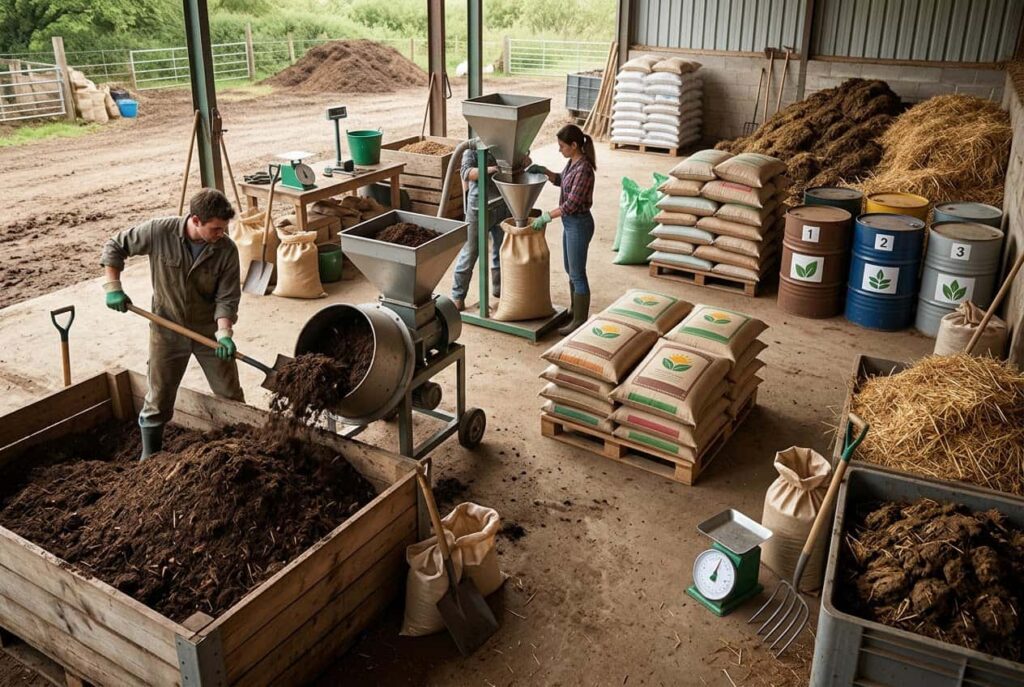
How to Start a Small Scale Organic Fertilizer Production Business?
Step 1: Choose Your Production Method
First things first:
You need to pick your production method.
Here are your three main options:
Windrow Composting
- Space needed: Large outdoor area
- Time: 3-6 months
- Cost: Low
- Best for: Beginners with land
In-Vessel Composting
- Space needed: Small (can be indoors)
- Time: 2-4 weeks
- Cost: Medium
- Best for: Urban areas, faster production
Vermicomposting
- Space needed: Medium
- Time: 2-3 months
- Cost: Low-Medium
- Best for: Premium organic fertilizer
Pro tip: I recommend starting with windrow composting. It’s simple, cheap, and you can scale up later.
Step 2: Secure Your Raw Materials
Here’s where things get interesting.
Your raw materials are everywhere. And most of them are FREE.
Check out these sources:
- Animal farms: Chicken manure, cow dung, pig waste
- Agricultural waste: Crop residues, rice husks, sugarcane waste
- Food processing plants: Fruit peels, vegetable waste
- Municipal waste: Leaves, grass clippings
But here’s the real catch:
Everything comes down to a steady supply.
I’ve watched setups crash simply because materials stopped coming in and production couldn’t keep up.
So what actually works?
Lock supply deals before day one. Go see five to ten nearby farms. Offer to haul away their waste for free, or toss in a small payment. Put it on paper.
Take my word for it.
Step 3: Get Your Equipment
Now for the fun part:
Equipment.
For a small scale operation producing 1-2 tons per day, here’s what you need:
Essential Equipment:
- Compost turner ($2,000-5,000)
- Crusher/grinder ($1,500-3,000)
- Screening machine ($1,000-2,500)
- Packaging machine ($800-1,500)
Optional (But Recommended):
- Granulator (for pellet production)
- Dryer
- Conveyor belts
Total investment?
You’re looking at $8,000-15,000 for a basic setup.
(Compare that to $100,000+ for chemical fertilizer equipment. Not bad, right?)
Step 4: Master the Production Process
Let me break down the process:
Phase 1: Pre-Processing
- Collect raw materials
- Sort to remove plastics/metals
- Shred large pieces
- Mix different materials (ideal C:N ratio is 25:1 to 30:1)
Phase 2: Composting
- Pile materials in windrows (4-5 feet high)
- Monitor temperature (should hit 131°F)
- Turn twice weekly
- Test moisture (aim for 50-60%)
Phase 3: Post-Processing
- Screen to remove large particles
- Package in 25kg or 50kg bags
- Label with nutrient content
- Store in dry area
The whole process takes 30-45 days for quality compost.
Not rocket science, right?
Step 5: Navigate Regulations
I know, I know.
Paperwork is boring.
But skip this step and you’ll regret it.
Here’s what you typically need:
- Business registration
- Environmental permits
- Organic certification (optional but valuable)
- Health and safety compliance
- Product testing certificates
Pro tip: Hire a local consultant for this. It’ll cost you $500-1,000 but save you months of headaches.
Step 6: Create Your Marketing Strategy
Here’s the thing:
You can make the world’s best organic fertilizer. But if nobody knows about it? You’re toast.
So here’s my proven marketing playbook:
Target Your Ideal Customers:
- Small organic farms
- Home gardeners
- Garden centers
- Landscaping companies
- Agricultural cooperatives
Pricing Strategy:
Start at 60-70% of chemical fertilizer prices. You’ll still make great margins (organic fertilizer costs 80% less to produce).
Sales Channels That Work:
- Direct farm sales (highest margins)
- Local garden stores (steady volume)
- Online marketplaces (growing fast)
- Farmers markets (build brand awareness)
Step 7: Scale Smart (The 6-Figure Formula)
Once you’re up and running, scaling is straightforward.
Here’s how:
Year 1: Foundation
- Perfect your process
- Build local customer base
- Generate testimonials
Year 2: Expansion
- Add product lines (liquid fertilizer, specialty blends)
- Hire 2-3 employees
- Invest in better equipment
Year 3: Domination
- Regional distribution
- B2B contracts
- Consider organic certification
I’ve watched companies jump from $20,000 to $200,000 in sales by sticking to this same playbook.
Common Mistakes to Avoid
Let me save you some pain:
Mistake #1: Starting too big
Start small. Master the basics. Then scale.
Mistake #2: Ignoring quality control
Test your NPK levels regularly. Consistency builds trust.
Mistake #3: Poor packaging
Invest in good bags. First impressions matter.
Mistake #4: No backup suppliers
Always have 2-3 sources for raw materials.
The Financial Reality Check
Let’s talk numbers:
Startup Costs:
- Equipment: $8,000-15,000
- Facility/Land: $5,000-10,000
- Permits/Legal: $1,000-2,000
- Working capital: $3,000-5,000
- Total: $17,000-32,000
Operating Costs (Monthly):
- Raw materials: $500-1,000
- Labor: $1,500-3,000
- Utilities: $200-500
- Marketing: $300-600
- Total: $2,500-5,100
Revenue Potential:
- Production: 30-60 tons/month
- Price: $150-250/ton
- Monthly revenue: $4,500-15,000
- Profit margins: 40-60%
Not bad for turning waste into gold, right?
Your Next Steps
Ready to get started?
Here’s exactly what to do:
- This week: Research local raw material sources
- Next 2 weeks: Create a simple business plan
- Month 1: Secure permits and equipment
- Month 2: Start production
- Month 3: Make your first sale
Here’s the plain truth:
Launching a small organic fertilizer operation isn’t just about making money. It actually matters.
Chemical inputs are wrecking soil, organic food demand keeps climbing, and you end up right where profit meets purpose.
Add startup costs under $30,000 and margins north of 50%, and the returns look hard to ignore.
So what’s stopping you?
The organic revolution needs you. And your bank account will thank you.
Remember: Every successful organic fertilizer business started exactly where you are now. The only difference? They took action.
Your turn.