What Is an Organic Fertilizer Production Plant? (The Simple Version)
An organic fertilizer production plant is an industrial facility that processes organic waste materials—things like animal manure, agricultural straw, and even food waste—into nutrient-rich fertilizer.
These plants use specialized machinery to transform raw organic matter into consistent, marketable products. We’re talking granulators, dryers, coolers, and packaging lines. The whole nine yards.
The end result? A product that improves soil structure, increases organic matter, and helps farmers grow better crops without synthetic chemicals.
Bottom line? These plants take waste that would otherwise pollute the environment and turn it into something farmers desperately need.
In this post, as a professional organic fertilizer production line manufacturer, I will share everything about organic fertilizer production plant.
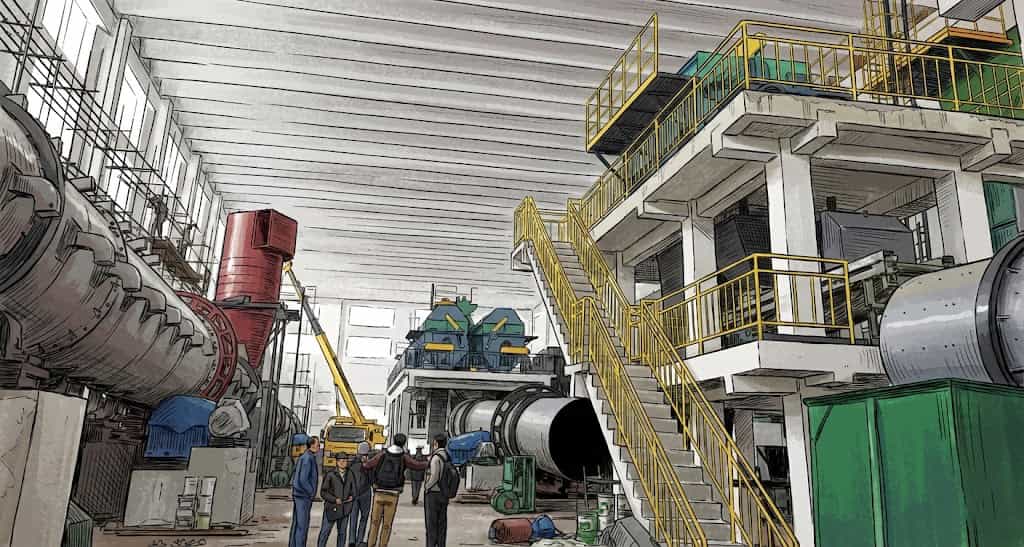
Inside an Organic Fertilizer Production Plant: The Step-by-Step Breakdown
Alright. Let’s walk through what actually happens inside one of these facilities.
I’ve visited dozens of plants over the years. Here’s what I see every time:
Step 1: Raw Material Collection and Preparation
Trucks roll in loaded with:
- Livestock manure (chicken, cow, pig, sheep)
- Crop residues (straw, stalks)
- Food processing waste
- Industrial organic byproducts
First stop? The solid-liquid separator.
If materials are too wet (common with fresh manure), this machine squeezes out excess moisture. Dryer materials = better composting.
Step 2: Composting/Fermentation
Now the real work begins.
Materials get formed into long windrows or loaded into fermentation tanks.
Here’s what most people miss:
You need to turn the pile regularly.
Why? Because oxygen fuels the microbes. Without oxygen, you get anaerobic decomposition. That smells terrible (like rotten eggs) and produces low-quality compost.
A compost turner solves this. It aerates the pile, breaks up clumps, and ensures even decomposition.
Most operations turn every 3-5 days during the first few weeks. After that, frequency drops.
Key metric: When the temperature stabilizes and the pile stops heating up after turning, you’re done. Usually 4-8 weeks total.
Step 3: Crushing
Finished compost often has lumps and clumps. Not ideal for selling.
A crusher (typically a vertical or semi-wet material crusher) breaks everything down into consistent particle size.
Why does this matter? Uniform particles mean uniform nutrient distribution. Your customers will thank you.
Step 4: Mixing (Optional but Recommended)
Want to create specialized products?
This is where you add:
- Beneficial bacteria
- Extra nutrients (like rock phosphate)
- Other organic amendments
A disc mixer ensures everything blends evenly. No hotspots. No weak spots.
Step 5: Granulation
This is the step that separates the pros from the hobbyists.
Granulation turns dusty powder into beautiful, uniform pellets.
Three main machine options:
Pan Granulator – Simple, affordable, great for small to medium operations. Uses a rotating pan to roll powder into balls (like making snowballs).
New Type Organic Granulator – Uses mechanical force to extrude pellets. Higher density. Better for某些 applications.
Rotary Drum Granulator – High capacity. Ideal for large-scale production (10+ tons per hour). Uses tumbling action with binding agents.
All three achieve granulation rates above 93%. That’s industry standard.
Step 6: Drying
Fresh granules contain moisture. Too much moisture = mold and spoilage.
A rotary dryer brings moisture content down to safe levels (typically under 15%).
Temperature note: Keep it between 60-80°C. Too hot kills beneficial microorganisms. Too cool doesn’t dry effectively.
Step 7: Cooling
Hot granules straight from the dryer? They’ll cake together in storage.
A rotary cooler brings temperatures back to ambient. This ensures free-flowing pellets that store beautifully.
Step 8: Screening
Now we separate the winners from the losers.
A rotary screener sorts granules by size:
- Oversize – Too big. Back to the crusher.
- Perfect size – On to packaging.
- Fines – Too small. Back to granulation.
Closed-loop systems like this minimize waste and maximize efficiency.
Step 9: Packaging
Last stop.
Automated packaging scales weigh and fill bags. Options range from simple single-bucket systems to high-speed dual-bucket setups with sewing machines and automatic palletizers.
Real talk: If you’re producing 5+ tons per day, automation pays for itself within months.
Organic Fertilizer Production Scale: From Backyard to Industrial
Here’s something most beginners get wrong:
You don’t need a massive factory to start.
Production lines come in all sizes:
Small-scale (1-2 tons/hour) – Perfect for farms or small communities processing local waste. Lower investment. Lower risk. Learn the ropes before scaling.
Medium-scale (3-5 tons/hour) – Serious commercial operations. Requires dedicated facility and 2-3 staff minimum.
Large-scale (10+ tons/hour) – Industrial production. 30,000+ tons annually. Major capital investment. Significant profit potential.
My advice? Start smaller than you think. Master the process. Then expand.
The Economics: What Does This Stuff Cost?
Let’s talk money.
I analyzed dozens of plants for this guide. Here’s what I found:
Equipment Costs (Ballpark)
| Scale | Investment Range |
|---|---|
| Small (1-2 t/h) | $30,000 – $80,000 |
| Medium (3-5 t/h) | $80,000 – $250,000 |
| Large (10+ t/h) | $250,000 – $1.2M+ |
Operating Costs
- Raw materials (often free or low-cost if you source waste)
- Labor
- Electricity
- Maintenance
- Packaging
- Transportation
Revenue Potential
Organic fertilizer sells for $200-$800 per ton, depending on:
- Nutrient content
- Granule quality
- Packaging
- Local market conditions
- Certifications (OMRI, organic, etc.)
Quick math: A 5 ton/hour plant running 8 hours/day, 250 days/year = 10,000 tons annually. At $300/ton average = $3 million gross revenue.
Not bad for turning waste into gold.
Raw Material Sources: Where to Find Your Gold
One of the best parts about this business?
Raw materials are everywhere.
Animal Manure
- Chicken (highest nitrogen)
- Cow (balanced, abundant)
- Pig (good nutrients, higher moisture)
- Sheep/goat (excellent, less common)
- Horse (great for composting)
Agricultural Residues
- Straw
- Rice husks
- Corn stalks
- Sugar cane bagasse
- Vegetable waste
Food Processing Waste
- Fruit/vegetable trimmings
- Brewery grains
- Coffee grounds
- Restaurant scraps
Municipal/Industrial
- Sewage sludge (needs careful treatment)
- Paper mill sludge
- Food manufacturing byproducts
Pro Tip: Partner with local farms, processors, or municipalities. Often they’ll PAY you to take their waste. Free raw materials + tipping fees = double win.
7 Tips for Starting Your Own Organic Fertilizer Plant
I’ve helped dozens of entrepreneurs launch fertilizer operations. Here’s what separates winners from losers:
1. Secure Raw Materials First
Don’t build a plant without guaranteed feedstock. Sign agreements with suppliers before you buy equipment.
2. Know Your Local Market
Who will buy your product? Organic farmers? Landscapers? Garden centers? Home gardeners? Each needs different packaging and marketing.
3. Start Simple
Master composting before you buy a granulator. Walk before you run.
4. Get Proper Permitting
Environmental regulations vary wildly. Check local requirements for:
- Air emissions
- Water discharge
- Odor control
- Zoning
- Waste handling
5. Test Everything
Regular lab testing ensures:
- Nutrient consistency
- Pathogen-free product
- Heavy metal compliance
- Customer confidence
6. Invest in Training
Your team needs to understand composting biology, equipment operation, and safety protocols. Don’t skip this.
7. Build Relationships
Connect with extension agents, agronomists, and farming groups. They become your best sales channel.
Common Mistakes to Avoid
Let me save you some headaches:
Skipping the curing phase – Fresh compost can harm plants. Always cure 2-4 weeks after active composting.
Ignoring moisture control – Too wet = anaerobic. Too dry = microbes sleep. Monitor daily.
Underestimating odor – Even well-managed plants smell sometimes. Plan for setbacks and buffers.
Buying undersized equipment – A 1 ton/hour line running 24/7 still only makes 24 tons/day. Size for growth.
Skipping quality testing – One bad batch destroys your reputation forever.
Forgetting about dust – Crushing and screening create dust. Plan for collection and containment.
Real-World Example: Success in Action
Let me share a quick case study.
A client in the Midwest started with 50 acres of poultry waste. Smelly. Problematic. Costing him money to dispose.
We helped him design a 2 ton/hour line:
- Compost turner
- Crusher
- Granulator
- Dryer/cooler
- Screener
- Packager
Eighteen months later:
- Processing 5,000 tons/year
- Selling to 200+ local farms
- Revenue: $1.2 million
- Profit margin: 35%
- Zero waste (fines get recycled)
- Neighbors? No more complaints
That’s the power of turning a problem into a product.
Final Thoughts
So what is an organic fertilizer production plant?
It’s a waste solution. It’s a soil solution. It’s a business opportunity.
Whether you’re a farmer looking to add value to manure, an entrepreneur seeking a growing market, or an investor interested in sustainable agriculture—this space deserves your attention.
The technology exists. The demand exists. The raw materials exist.
The only question is: Will you make it happen?
P.S. If you’re serious about starting your own organic fertilizer production plant, do your homework. Visit operating facilities. Talk to equipment manufacturers. Run the numbers. And start small.
P.P.S. Got questions? Drop them in the comments. I read every single one.