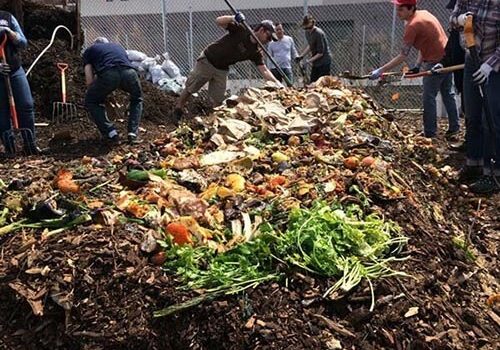
Organic Fertilizer Production Line Manufacturer
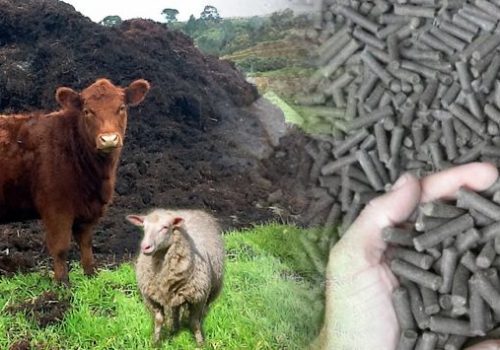
We are experts in designing and building advanced organic fertilizer production lines that turn organic waste like animal manure, agricultural byproducts, and food waste into fertilizers that are both eco-friendly and full of nutrients. Our solutions are customized to meet the different needs of our global clients, from small-scale farmers to large industrial operations. This ensures sustainability, profitability, and high-quality output.
Organic Fertilizer Production Line Definition
An organic fertilizer production line is a complete system that turns organic waste materials into high-quality fertilizer products. This is done through fermentation, composting, and processing technologies. These production lines turn different types of organic materials into fertilizers that are full of nutrients. These fertilizers can be used in farming.
Types of Organic Fertilizer Production Lines
Pig Manure Fertilizer Production Line
Make the quality of pig waste better by using an effective production line to make fertilizers that are full of nutrients.
Chicken Manure Fertilizer Production Line
Convert poultry waste into nutrient-rich fertilizer in a way that is both efficient and eco-friendly.
Cow Dung Fertilizer Production Line
To make organic fertilizer from cow dung, follow these steps: compost, dry, crush, mix, and form into granules.
Sheep Manure Fertilizer Production Line
It efficiently turns sheep waste into nutrient-rich fertilizer. The process involves composting, drying, and granulating.
Corn Stalks Fertilizer Production Line
It turns wasted corn stalks into valuable soil nutrients, which helps farmers practice eco-friendly farming.
Biogas Residue Fertilizer Production Line
Turn your waste into nutrient-rich fertilizer to help the environment. Make more money and throw away less.
Organic Fertilizer Production Line Working Process
Our organic fertilizer production lines follow a meticulous process to ensure the highest quality output:
- Raw Material Preparation: Collect organic wastes such as animal manure, crop residues, or food processing byproducts. Additives like coco peat can be mixed to improve fertility.
- Dehydration (if necessary): Use a solid-liquid separator to dehydrate high-moisture materials like animal manure.
- Fermentation: Decompose organic matter in fermentation facilities using compost turners. This step kills pathogens and stabilizes the material.
- Crushing: Reduce fermented material to fine powder using crushers. For example, vertical crushers are ideal for high-moisture materials, while hammer crushers suit large-scale operations.
- Mixing: Blend crushed materials uniformly, adding any necessary additives for enhanced nutrient content.
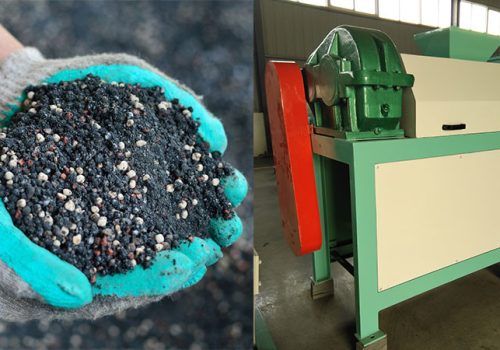
- Granulation (for granular fertilizers): Form the mixture into pellets using advanced pelletizers, such as rotary drum granulators or extrusion granulators.
- Drying: Dry the pellets to reduce moisture content (e.g., from 20-25% to a suitable level for storage).
- Cooling: Cool the dried pellets to stabilize their temperature and prevent caking.
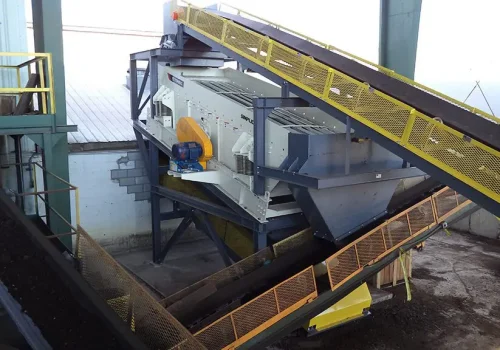
- Screening: Use screening machines to ensure granules meet size specifications, removing any oversized or undersized particles.
- Coating (optional): Apply a protective coating to enhance granule strength and nutrient release.
- Packaging: Package the final product—whether granular or powdery—into bags or bulk containers for distribution.
Organic Fertilizer Production line Cost
Organic fertilizer production line costs vary significantly based on production capacity, fertilizer type (powder vs. granular), and equipment configuration. The investment ranges from as low as $10,000 for basic setups to $550,000 for large-scale granular production facilities.
Powder Organic Fertilizer Production Lines
Powder organic fertilizer lines are the most cost-effective option, requiring fewer machines and lower initial investment. These systems can handle capacities from 1-20 t/h with budgets typically under $90,000.
Small-Scale Options (Under $10,000)
For entrepreneurs with limited budgets or those just starting their organic fertilizer business, the most economical production plan costs less than $10,000. This basic setup includes essential equipment like a feeding hopper, semi-wet material crusher, screening machine, packing scale, and belt conveyors.
Medium-Scale Production (1-5 t/h)
A complete 1-5 t/h organic fertilizer powder line costs approximately $30,000-$45,000, making it an affordable solution for small-scale production. This setup typically includes a manure dewatering machine, crawler-type compost turner, crushers, and auxiliary equipment.
Large-Scale Production (15-20 t/h)
For high-volume operations, a 20 t/h organic fertilizer powder factory costs approximately $80,000-$90,000. This configuration includes a double-wheel compost turner for large-volume fermentation, double-bucket powder packaging machine, and enhanced processing equipment.
Granular Organic Fertilizer Production Lines
Granular organic fertilizer commands higher market demand due to its attractive appearance and superior quality, but requires significantly higher investment due to additional processing equipment including drying, cooling, and dust removal systems.
| Capacity | Cost Range |
|---|---|
| 1-5 t/h | $100,000-$150,000 |
| 5-10 t/h | $150,000-$350,000 |
| 8-10 t/h | $250,000-$360,000 |
| 10-20 t/h | $350,000-$550,000 |
| 15-20 t/h | $300,000-$500,000 |
If your budget ranges from $250,000 to $360,000, an 8-10 t/h granular organic fertilizer production line is recommended. This setup includes a groove-type compost turner and a 2080 rotary drum granulator with 8-15 t/h capacity, plus auxiliary equipment for crushing, mixing, and packing.
Simplified and Economical Options
For those seeking lower investment alternatives, simplified configurations are available. A basic setup with just a compost turner and granulator requires only $10,000-$80,000, while a medium design including composter, crusher, screener, granulator, and packaging machine costs approximately $50,000-$150,000.
Additional Considerations
The total project cost extends beyond equipment to include land acquisition or leasing. For organic fertilizer plants, land requirements range from 200㎡ for minimal setups to several thousand square meters for large operations. Annual land rent can cost $1,000-$5,000, while purchasing industrial land may require $20,000-$90,000.
Production capacity significantly influences cost-effectiveness, with larger operations generally offering better returns on investment despite higher initial costs. The choice between powder and granular production should consider market demand, storage requirements, and available budget, as granular fertilizers typically command premium prices but require substantially higher initial investment.

Applications of Organic Fertilizer Production Line

Organic Fertilizer Production
Processes animal manure, agricultural waste, and industrial byproducts into organic fertilizer pellets.

Compound Fertilizer Production
Produces NPK, DAP, MAP, and other compound fertilizers for balanced crop nutrition.

Mineral Fertilizer Production
Granulates limestone, gypsum, and biochar for soil amendment.

Sustainable Agriculture
Supports eco-friendly farming by recycling waste into nutrient-rich fertilizers.

Landscaping and Gardening
Produces fertilizers for turf, ornamental plants, and home gardens.
Why Choose Us as Organic Fertilizer Production Line Supplier
Expertise
Our team of skilled engineers and technicians brings decades of experience in fertilizer production technology, ensuring reliable and efficient solutions.
Customization
We design fertilizer machines to meet your specific requirements, optimizing performance and cost-effectiveness.
Quality
We use premium materials and components, adhering to international quality standards.
Global Reach
We have successfully delivered solutions to clients across the globe, building trust and long-term partnerships.
Contact Us
Ready to elevate your fertilizer production? Contact us today to discuss your custom solution.